

The question remains: is the Giant ready to strengthen its feet and walk the talk? If Nigeria can match its external diplomacy with internal discipline, the Nairobi Summit could indeed be the beginning of its greatest industrial era.
By Jibrin Abubakar
As the global economic compass increasingly points toward the African continent, the “Africa Forward” Summit, currently underway in the vibrant city of Nairobi, Kenya, represents more than just another diplomatic gathering. Co-hosted by the Kenyan government and France, the summit marks a strategic pivot in how Europe engages with Africa, moving away from traditional aid-based models toward high-stakes investment, technological exchange, and sustainable industrialization.
While the setting is East Africa, the echoes of the discussions in Nairobi are vibrating strongly in West Africa, specifically in Abuja and Lagos. For Nigeria, Africa’s most populous nation and a leading economic powerhouse, the Africa Forward Summit presents a unique window of opportunity to solidify its position as the continent’s premier investment destination.
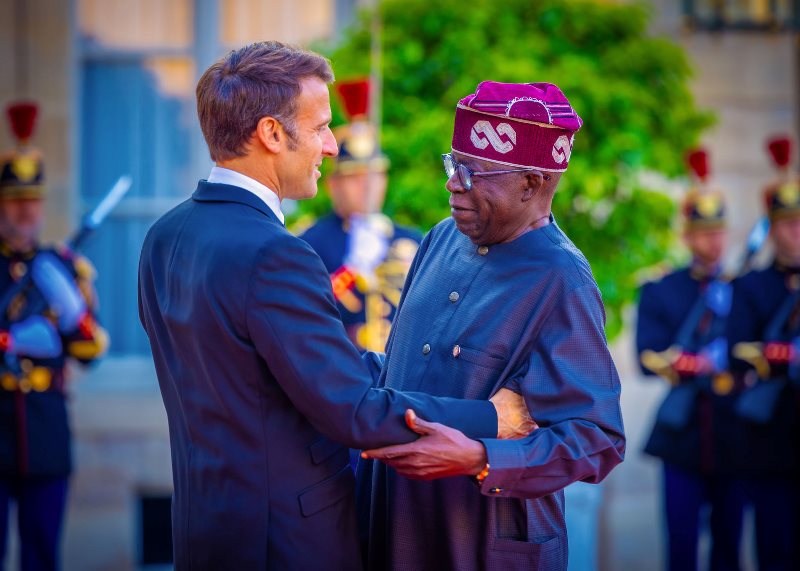
Under the administration of President Emmanuel Macron, France has sought to redefine its relationship with Africa, looking beyond its traditional Francophone sphere to engage more deeply with Anglophone giants like Kenya and Nigeria.
By co-hosting this summit in Nairobi, France is signaling its appetite for innovation-driven partnerships. For Nigeria, which already hosts over 100 French companies—including giants like TotalEnergies, Fan Milk (Danone), and Schneider Electric—this summit is the perfect stage to scale these existing ties into new, high-growth sectors.
Nigeria is home to the highest number of tech “unicorns” in Africa. From fintech to agritech, the Nigerian startup scene is the engine of its modern economy. One of the core pillars of the Africa Forward Summit is digital transformation.
France, through initiatives like “Digital Africa” and its robust Venture Capital ecosystem, is looking to de-risk investments in African tech.
For Nigerian entrepreneurs, the summit provides a direct pipeline to French capital and technical expertise. We expect to see new co-investment funds launched that will allow Nigerian startups to scale across the continent, utilizing French technology while maintaining Nigerian ownership and local market insights.
As Nigeria navigates its Energy Transition Plan (ETP), the need for “bridge fuels” like gas and a rapid scale-up of renewables is paramount. France is a global leader in nuclear and renewable energy technology. In Nairobi, high-level talks are focusing on green hydrogen and solar infrastructure.
Nigeria stands to benefit from bilateral agreements that could see French energy firms like Engie or EDF partnering with local Nigerian firms to solve the perennial challenge of power generation. The summit offers a platform for Nigeria to secure the “Green Finance” necessary to transition its industrial base without sacrificing economic growth.
With Lagos projected to become the world’s largest megacity by the end of the century, Nigeria’s infrastructure deficit is a critical bottleneck. French expertise in urban planning, high-speed rail (Alstom), and water treatment is world-class.
The Africa Forward Summit is facilitating “B2B” (Business to Business) matchmaking that could lead to major concessions and Public-Private Partnerships (PPPs) for Nigerian transport and housing projects. By aligning these projects with the African Continental Free Trade Area (AfCFTA) goals discussed at the summit, Nigeria can better position itself as the logistics hub of West Africa.
A unique aspect of the Nairobi summit is its focus on the “Orange Economy”—the creative and cultural industries. Nigeria’s Nollywood and its global music dominance (Afrobeats) are potent tools of soft power. France has shown a keen interest in supporting the formalization of these sectors.
Despite these challenges, the Nairobi Summit remains a critical opportunity. The benefit for Nigeria lies in using these international platforms as a mirror. The French interest in Nigeria is not based on charity; it is based on the undeniable potential of 200 million people.
Nigeria can leverage French development agencies (like AFD) to provide guarantees that mitigate the risks associated with the Naira’s volatility. To counter the “Japa” effect, Nigeria should secure agreements in Nairobi for the establishment of French-standard technical institutes locally, ensuring a steady supply of skilled labor for new industrial projects.
By partnering with French firms in the “Sugar” and “Fertilizer” sectors (much like the Dangote model), Nigeria can use French technology to turn its vast arable land into a source of foreign exchange, finally diversifying away from oil.
The Africa Forward Summit is a test of Nigeria’s diplomatic and economic agility. To move from being a “Giant with Feet of Clay” to a “Giant with Pillars of Steel,” Nigeria must use the Nairobi Consensus as a catalyst for internal reform.
The world is ready to move “Forward” with Africa. France is ready to invest. Kenya is ready to facilitate.
The question remains: is the Giant ready to strengthen its feet and walk the talk? If Nigeria can match its external diplomacy with internal discipline, the Nairobi Summit could indeed be the beginning of its greatest industrial era.