
By Jibrin Abubakar, PhD
In Suleja Emirate, a solemn quiet prevails as the final bell tolls for an educational matriarch.
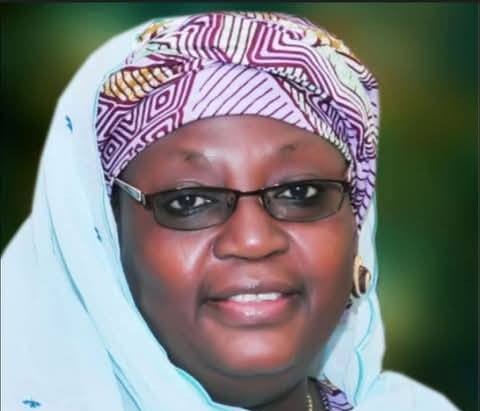
Hajiya Ramatu Awwal Ibrahim, the last of the Mohicans took a celestial bow Friday November 21, 2025, and joined her ancestors.
Streets that once echoed with the vibrancy of schoolchildren now seem hushed in solemn reverence, on account of a collective grief of a community that lost not just a teacher, but a visionary, a mentor, and a mother to generations.
Her life, devoted to shaping minds and uplifting the underprivileged, leaves behind an enduring legacy, and with her passing, Suleja mourns the departure of a guiding light whose influence extended far beyond classroom walls.”
Even Niger State Governor Umaru Bago could not contain his sorrow, describing her death as ‘deeply painful’ and noting that she leaves behind a void that will be difficult to fill.
What struck the Suleja Emirate so deeply was the unyielding finality of her departure. She was a woman of extraordinary simplicity, relentless diligence, and unwavering commitment, a teacher, public servant, mother, wife, stateswoman, and visionary, all in one remarkable individual.
Hajiya Ramatu Awwal Ibrahim was a visionary, indomitable, and compassionate leader, whose brilliant mind, unwavering integrity, and nurturing heart left an indelible mark on all she touched. Her presence commanded respect, her wisdom inspired generations, and her courage reshaped the educational landscape of Northern Nigeria.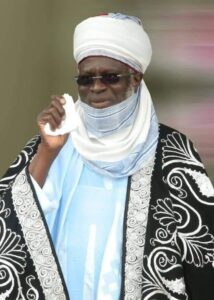
The people of Suleja and Niger State have comforted themselves with the enduring wisdom that the measure of a life lies not in its duration, but in its depth and purpose
In Shakespeare’s Macbeth (Act 5, Scene 5), he writes: ‘Out, out, brief candle! Life’s but a walking shadow, a poor player that struts and frets his hour upon the stage and then is heard no more.’ This poignant scene captures the fleeting nature of life and the inevitability of death, reminding us that it arrives in its own time.
According to reports, she breathed her last in Egypt after a prolonged illness.
Hajiya Ramatu was the wife of Alhaji (Dr.) Muhammad Awwal Ibrahim, the Emir of Suleja, an octogenarian statesman whose rise to Emirship re-ignited local and national interest in the traditional polity.
As the Emir’s wife, she carried the dual responsibility of upholding both her own public career and the dignity of the palace. Many condolence messages describe her as a “godly mother,” a “patriotic woman leader,” and a “detribalised Nigerian.
A Suleja native by heritage and born in Maru Local Government of present-day Zamfara State, Hajiya Ramatu’s life stood as a powerful testament to the transformative force of education
Her formative years at LEA Primary School, Minna, and Saint Fatima Secondary School (1962–68; 1969–73) presaged a distinguished career in education.
She obtained her NCE from the College of Education, Zaria (1977), and certification in Islamic Education (Islamic Education Trust, Minna, 1980), and later secured a Bachelor of Education from Ahmadu Bello University, Zaria (1982).
Her quest for professional refinement took her to Budapest, Hungary in 1985 where she obtained further training in Industrial and Vocational Education. (Biographical records supplied.)
Her public service trajectory charted a steady ascent. Beginning as a Home Economics educator in the FCDA Education Department (1985), Hajiya Ramatu served as Head of Vocational at the Federal Vocational Training Centre, Orozo (1986), and was appointed pioneer principal of Government Girls’ Science Secondary School, Kuje (1987).
She continued to deepen her expertise with a Master’s degree in Guidance and Counselling from the University of Abuja (1995) and thereafter occupied senior administrative roles culminating in directorships and board chairmanships within the FCT education apparatus.
In 1984 Hajiya Ramatu founded Rahma Schools in Suleja, an institution that matured over decades into an educational complex spanning nursery, primary, secondary, and tertiary offerings. Under her stewardship Rahma Schools expanded, converting into a secondary school (2005–2011), establishing Rahama International Academy (a boarding secondary founded in 2016), and later developing diploma programmes in affiliation with Kaduna Polytechnic.
Public records and local reportage confirm the Rahma institution’s affiliation with Kaduna Polytechnic and its matriculation ceremonies in recent years.
Her entrepreneurial zeal did not pause at secondary education.
In subsequent years she oversaw the establishment of Rahma College of Technology, Science and Management Studies, an NBTE-approved monotechnic designed to deliver vocationally oriented tertiary education to youths of Suleja and environs.
The college and affiliated diploma programmes have produced graduates across disciplines including Accounting, Computer Science, Public Administration, and Science Laboratory Technology, an outcome that has broadened access to professional education in a region often underserved by tertiary outlets.
Hajiya Ramatu’s shelves of honours spoke to a life of consistent achievement: commendation by the FCT Minister for the best managed secondary school (1993); merit awards from corporate and educational bodies (1998, 2003); a ministerial commendation connected to national sporting contributions (2009); and national recognition as Principal Emeritus of Nigeria (PEN Award) in 2015.
Internationally, she represented Nigerian educational leadership in conventions and professional trainings across Uganda, Canada, Tanzania, Australia, and Malaysia between 2008 and 2014.
Beyond the bricks and mortar of her schools, Hajiya Ramatu’s legacy resides in the tens of thousands of lives shaped by her curriculum, mentorship and stewardship: girls who were encouraged to stay in school; young people who obtained marketable skills; and a community that benefitted from coherent educational programming and institutional continuity.
Her public career combined effective administration with an abiding pastoral concern for the underprivileged, a synthesis that gave Rahma Schools their reputation for
To students, staff and alumni of Rahma Schools the imperative is to convert grief into fidelity: to continue the work she began, to maintain the standards she set, and to propagate the values of discipline, scholarship and service that she championed.
In an age hungry for reliable institutions, Hajiya Ramatu’s life supplies a template for leadership grounded in humility and sustained by competence.
Though the mortal life of Hajiya Ramatu Awwal Ibrahim ends here, the family she forged not only through blood, but through deeds, persists. Her children and grandchildren inherit not just a royal name, but a legacy of scholarship, dignity, compassion, and civic responsibility.
More so, the families of her many students, mentees, and community benefactors now form part of an extended, spiritual family, a living example of her maternal heart.
In an age where leadership is often defined by power, her life reminds us that true leadership springs from service, humility, and the quiet strength of family values.
May her children draw strength from her example, may her descendants carry forward her vision, and may the many lives she touched remember her not only as an Emir’s wife, but more importantly, as a mother of souls, a builder of futures, and an anchor of hope for Suleja and beyond.
May Almighty Allah forgive her shortcomings, accept her labours, and grant her eternal rest. Ameen.
Dr. Abubakar writes from Suleja and can be reached: 08051000536.