
Both ministers stressed the need to re-establish the Nigeria-Morocco Business Council to promote trade and investment, particularly under the African Continental Free Trade Area framework and an existing double taxation treaty.
Nigeria and Morocco are expected to sign an intergovernmental agreement in the fourth quarter of 2026 to move forward with the proposed Atlantic coast gas pipeline project, according to Nigeria’s Ministry of Foreign Affairs.
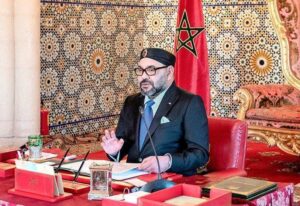
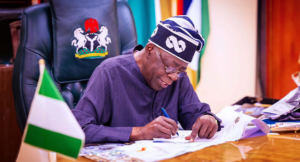
The agreement, to be executed by President Bola Ahmed Tinubu and King Mohammed VI, follows the completion of preliminary technical studies on the Nigeria-Morocco Gas Pipeline, also known as the African Atlantic Gas Pipeline.
The ambitious project is designed to transport natural gas from Nigeria along the West African coast to Morocco, with the potential to enhance regional energy security, deepen economic integration, and create new opportunities for industrial development across participating countries.
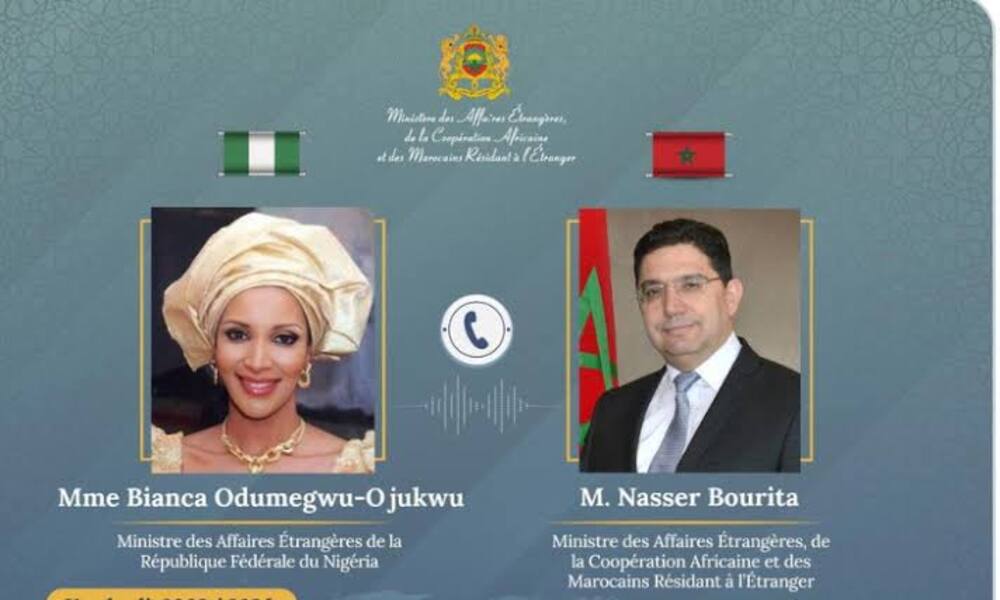
The development was discussed during a telephone call last Friday between Nigeria’s Foreign Minister Bianca Odumegwu-Ojukwu and her Moroccan counterpart Nasser Bourita, the ministry said in a statement on Tuesday.
The head of Morocco’s hydrocarbons and mining agency (ONHYM), Amina Benkhadra, told Reuters last month that an intergovernmental agreement on a planned $25 billion Nigeria-Morocco gas pipeline would be signed this year.
Originally conceived a decade ago, the Nigeria-Morocco Gas Pipeline is planned as a 6,900-kilometre hybrid offshore and onshore network with a projected capacity of 30 billion cubic metres (bcm) of natural gas annually. Of this volume, 15 bcm is earmarked to meet Morocco’s domestic energy needs and support gas exports to Europe, according to Amina Benkhadra.
Beyond the gas pipeline project, Nigeria and Morocco also explored opportunities for cooperation in fertilizer production and distribution, recognizing the critical role of affordable fertilizer in strengthening agricultural productivity and enhancing food security across Africa.
Both ministers stressed the need to re-establish the Nigeria-Morocco Business Council to promote trade and investment, particularly under the African Continental Free Trade Area framework and an existing double taxation treaty.